The Gordon Group conducts cutting-edge research to foster innovation and collaboration with stakeholders to address global health and environmental challenges effectively. We have a multidisciplinary teams comprising researchers, scientists, engineers, policy analysts and project managers.
What This Division Offers
Collaboration and Partnerships:
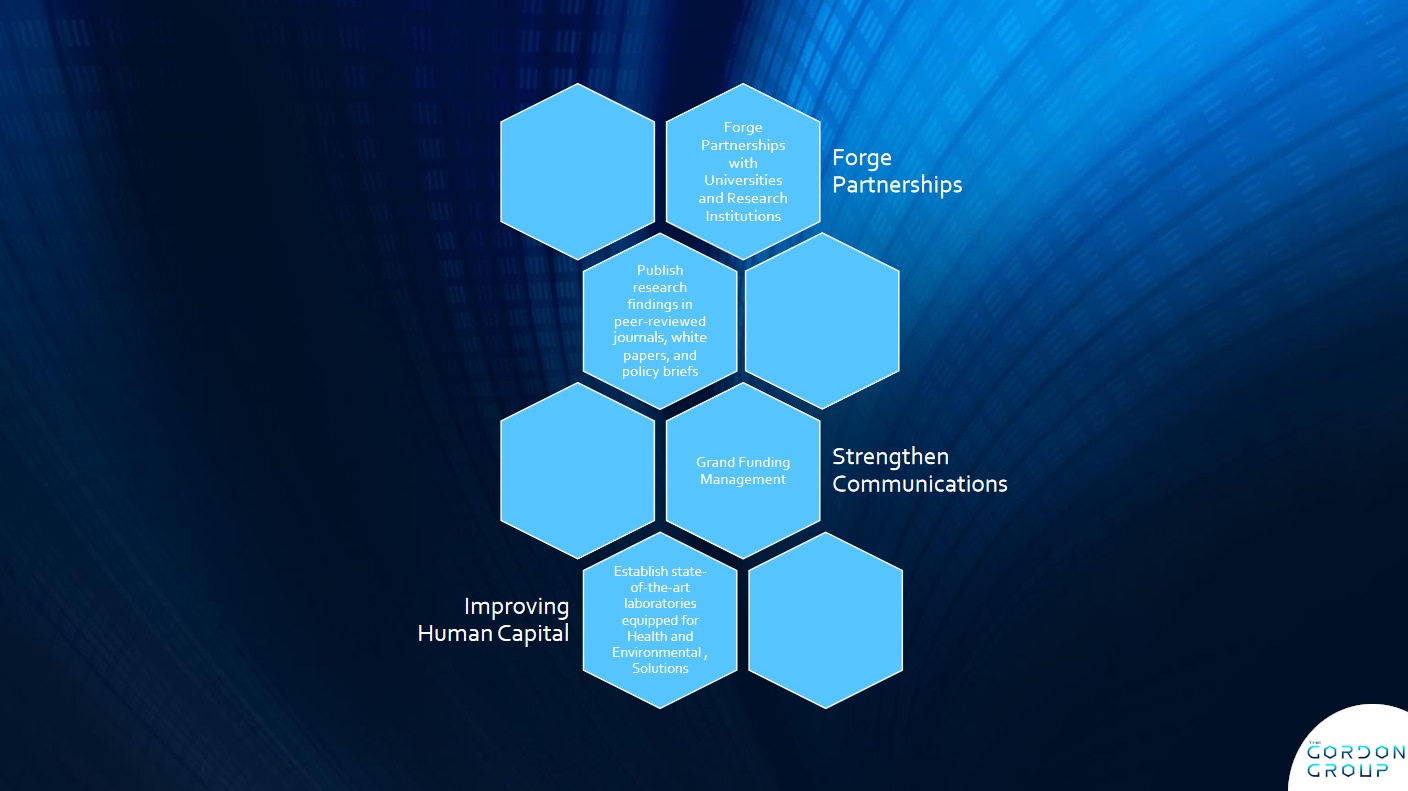
National and International Academic Institutions: Forge partnerships with universities and research institutions to leverage expertise and access research funding.
Government Agencies: Collaborate with environmental and health agencies to align research priorities and influence policy development.
Industry Partners: Engage with private sector companies to pilot and implement innovative solutions for environmental and health challenges.
Funding and Grants:
Grant Applications: Pursue grants from government agencies, foundations, and international organizations focused on health, environment, and sustainability.
Corporate Sponsorship: Seek sponsorship from corporate partners interested in supporting research and development initiatives in health and environment.
Technology and Innovation Hub:
Laboratories: Establish state-of-the-art laboratories equipped for environmental monitoring,
bioinformatics, genomics, and epidemiological research.
Innovation Incubator: Create a space for ideation, prototyping, and testing of new technologies and solutions with potential for commercialization.
Knowledge Dissemination and Impact Assessment:
Publications: Publish research findings in peer-reviewed journals, white papers, and policy briefs to contribute to scientific knowledge and inform decision-making.
Community Engagement: Conduct outreach programs, workshops, and public seminars to raise awareness about health and environmental issues and promote sustainable practices.
Ethical Considerations and Sustainability:
Ethical Guidelines: Adhere to ethical standards in research involving human subjects, animals, and the environment.
Sustainability Practices: Incorporate sustainable practices in research operations, including energy efficiency, waste reduction, and green procurement.
Long-Term Strategy and Growth:
Strategic Roadmap: Develop a long-term strategy aligned with organizational goals, evolving
research trends, and global health and environmental priorities.
Capacity Building: Invest in professional development and training programs for staff to enhance expertise in health, environment, and interdisciplinary research.